Have you ever wondered why the tiny glass pieces in your phone camera, DSLR lens, or even a telescope can capture sharp photos or reveal distant galaxies? Behind every lens lies an optical engineer’s centuries-long "hunt" for aberration control—from the most basic meniscus lens to complex catadioptric systems, humanity has spent 200 years mastering the art of "taming light." Today, let’s trace the "evolution tree" of lens design and uncover the key technologies that revolutionized photography and observation.
In budget cameras, toy lenses, or disposable film cameras, you’ll almost certainly find a simple meniscus lens: shaped like a crescent moon (convex on one side, concave on the other), it’s so structurally simple it’s "no-frills." But cheapness comes at a cost—spherical aberration, chromatic aberration, and field curvature (blurry edges) are all uncorrected. To get decent images, you need a small "stop" (aperture): stop down to f/10–f/15, and aberrations weaken significantly, though distortion (e.g., straight lines warping) remains.
Here’s a pro tip: the stop mustsit on the concave side (whether before or after the lens). This position filters out off-axis light and reduces astigmatism and coma (light spots turning into comet tails). If you add a "compound structure" (multiple cemented elements) to the meniscus, you can correct some chromatic aberration—but costs rise, making it uneconomical.
A game-changer here is the diffractive surface: a plastic lens molded with λ/(n-1) high steps (λ = wavelength, n = refractive index). It corrects chromatic aberration, regulates temperature, and even compensates for single-element lens aberrations. You’ll still find it in budget cameras, headset eyepieces, and more.
Want to shoot vast landscapes or architecture? You need a wide-angle lens, but standard wide-angles often suffer from "barrel distortion" (straight lines bulging). Enter the reverse telephoto (retrofocus) lens: it combines a normal objective with a negative element near the front focus. By bending light outward, it solves wide-angle distortion andleaves room for a long back focal length (perfect for filters or sensors). Early reverse telephotos had a separate rear objective; today, they’re integrated into monolithic designs, hard to categorize.
Even more "symmetry-obsessed" is the periscope lens: two simple cylindrical lenses sandwiching the aperture, like a periscope. This symmetry slashes coma, lateral chromatic aberration, and distortion—but axial chromatic aberration (red/blue light not focusing together) and field curvature worsen slightly. If you make the cylindrical lenses achromatic, chromatic aberration vanishes, but the maximum aperture is limited to ~f/8. This "fast rectilinear" design was once a favorite for mid-range cameras.
The late 19th century brought a breakthrough: aperture revolution. The Protar lens (thick convex-concave structure) used a large gap between its convex and concave surfaces to flatten the image plane, then corrected chromatic and spherical aberration via a cemented interface. While residual spherical aberration limited apertures to f/4.5–f/8, it was already a "godsend" for medium-wide angles—and delivered stunning clarity when stopped down slightly.
Then came the Cooke Triplet—a simpler, more versatile design: a negative quartz element sandwiched between two positive crown glass elements (like a sandwich). This gave engineers enough "degrees of freedom" (shape, focal length, spacing) to correct all major aberrations. At f/5.6, a compact triplet covers up to 60°; with high-refractive-index glass, it can achieve f/2 for short focal lengths. It’s the "most widely used photographic lens"—from vintage cameras to modern derivatives, its DNA is everywhere.
Need to freeze motion or shoot portraits? You need a high-speed lens (f/2 or wider). Enter the Double Gauss system: derived from the "Gaussian form" of telescope objectives, it uses two convex cylindrical elements (both convex toward the telecentric point) to deliver unbeatable spherical/chromatic aberration correction. The only flaw? "Oblique spherical aberration" (off-axis light rays veering off course)—fixed by carefully controlling light vignetting. Today’s "trinity lenses" (e.g., 24–70mm f/2.8) are all Double Gauss variants: outer elements split, air gaps added, or triple lenses used to boost performance.
The Tessar lens looks nearly identical to the Cooke Triplet but is actually a Protar descendant. It outperforms the Triplet in coverage, clarity, and versatility—making it the go-to for premium enlarger lenses and mid-speed "standard" camera lenses.
For extreme wide angles (>180°), there’s the fisheye lens: a powerful negative cylindrical front element bends light to cover ultra-wide fields, but barrel distortion warps straight lines into "bulges." It’s perfect for creative shots—not "realism-first" work.
The 19th-century portrait photographer’s darling was the Petzval lens: f/3 aperture for dreamy background blur, but a narrow 10° field of view (only faces fit!). Modern versions reverse the rear element order and cement them, boosting apertures to f/1.6 for movie projectors—though field curvature still limits its use.
A "strengthened" Cooke Triplet is the Split-Crown Triplet: splitting one element into two to reduce aberrations. This doubles the maximum aperture (e.g., from f/3.5 to f/1.75) but shrinks the field of view—ideal for speed-critical applications.
Telephoto lenses (long-focus lenses) have a focal length longer than the distance from the front vertex to the image plane. They use a "positive + distant negative" structure to "stretch" light, flattening the image. But their lack of symmetry makes distortion hard to control, and extremely long ratios risk over-correcting curvature.
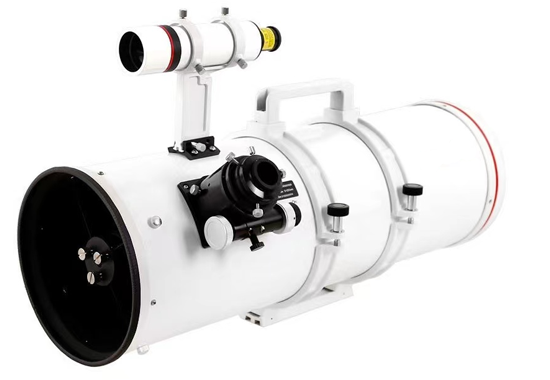
Catadioptric systems mix mirrors and refracting surfaces to correct mirror aberrations. For example, the Schmidt system (aspheric corrector plate + spherical mirror) delivers wide fields and large apertures—perfect for amateur astronomy. The Cassegrain system (two aspheric mirrors) is the backbone of most telescopes: compact, long focal length, and ideal for deep-space imaging (like the Hubble Space Telescope).
From the "good enough" meniscus lens to the "all-in-one" Double Gauss, to the "astronomy-grade" catadioptric systems, every step in lens design is a dance between "demand" and "technology": cheap means accepting aberrations; wide angle means bending light; speed means taming oblique rays.