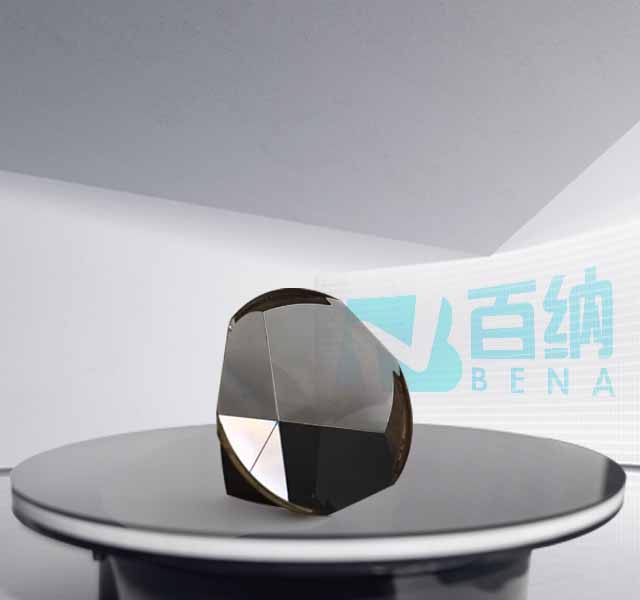
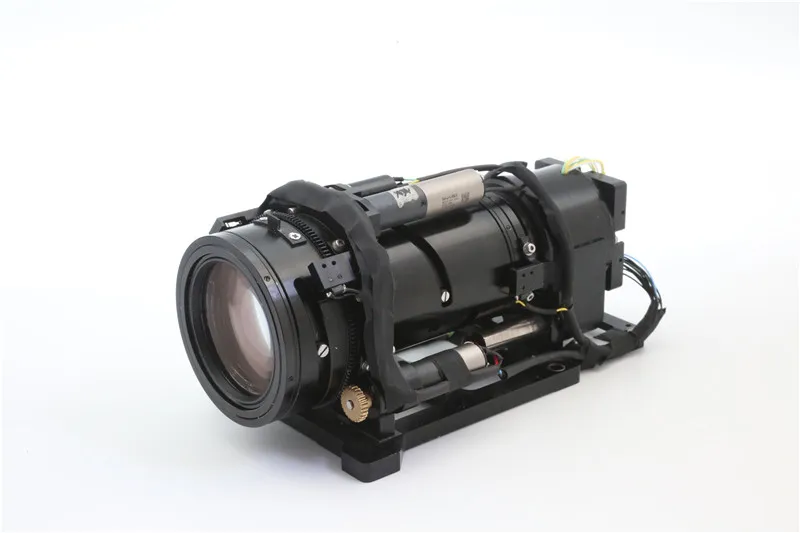
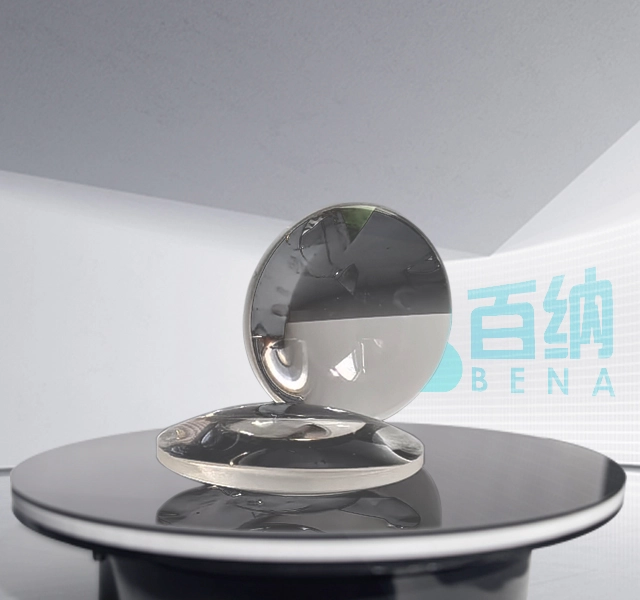
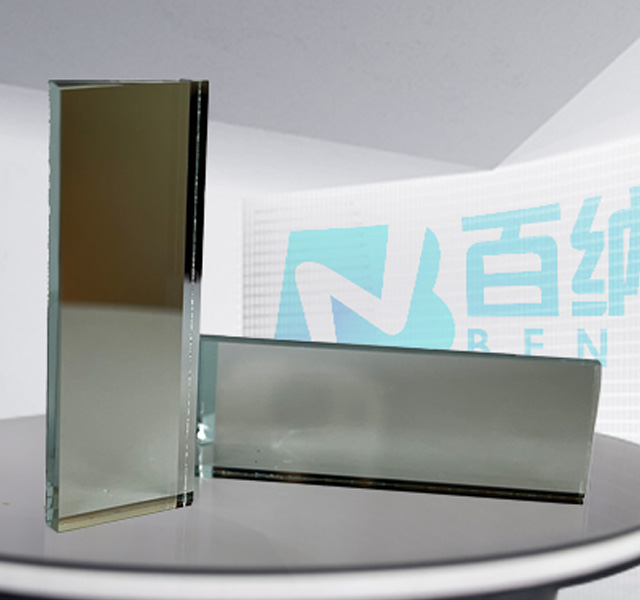
In optical systems, both reflective and anti-reflective coatings play vital roles in enhancing performance. Reflective coatings are essential for systems that require high reflectivity, such as lasers and mirrors, while anti-reflective coatings minimize light loss and improve transmission in imaging and sensing applications. These thin films are designed to optimize the interaction of light with optical components, enabling superior performance in a wide range of systems.
For many optical instruments, traditional metal reflective coatings already meet common requirements due to their high reflectivity across various wavelengths. Common materials used in metal reflective coatings include:
Aluminum (Al): The most widely used material, providing good reflectivity in the ultraviolet (UV), visible, and infrared (IR) spectrums.
Silver (Ag): Offers the highest reflectivity but tends to have poor stability, making it suitable for specific short-term applications.
Gold (Au): Commonly used in the IR spectrum, known for its excellent stability.
Platinum (Pt) and Rhodium (Rh): Highly stable and durable, often used in demanding environments.
Metal coatings are cost-effective and provide sufficient reflectivity for most applications. However, for systems requiring even higher reflectivity, enhanced metal mirrors or all-dielectric multilayer coatings are employed.
In certain applications, such as high-power laser systems or space-based optics, higher reflectivity is critical. Enhanced metal mirrors combine a metal layer with additional dielectric layers to boost reflectivity while maintaining stability. These designs are particularly useful in environments where both high performance and durability are required.
All-Dielectric Multilayer Reflective Coatings: High Performance for Laser Systems with Dielectric Optical Coating. All-Dielectric multilayer Reflective coatings are widely used in laser applications and other high-performance systems due to their unique advantages:
Maximum Reflectivity: Theoretically, by increasing the number of layers, reflectivity can approach 100%.
Minimal Absorption: Unlike metal coatings, dielectric coatings exhibit low absorption, making them ideal for high-energy laser systems.
Broadband Performance: These coatings can be designed to provide high reflectivity across a wide range of wavelengths, from UV to IR.
However, practical limitations arise from absorption and scattering losses within the coating layers, which restrict the maximum number of layers that can be effectively applied.
While all-dielectric multilayer coatings offer exceptional reflectivity, their performance is constrained by inherent losses:
Absorption Losses: Even small amounts of material absorption can accumulate over multiple layers, reducing the overall reflectivity.
Scattering Losses: Imperfections in coating uniformity or interface quality can scatter light, further diminishing reflectivity.
As a result, beyond a certain number of layers, adding more does not increase reflectivity and may even decrease it due to increased losses. Balancing layer count with minimizing these losses is a key challenge in designing high-performance dielectric coatings.
Optical thin films, including reflective and anti-reflective coatings, are indispensable in modern optical systems. While metal coatings provide a cost-effective solution for many applications, all-dielectric multilayer coatings offer superior performance in high-precision systems such as lasers and space optics.
Despite limitations from absorption and scattering losses, dielectric coatings remain a critical technology for achieving maximum reflectivity and minimizing light loss. As optical systems continue to evolve, the development of advanced thin film technologies will remain essential for meeting the demands of next-generation applications.
Bena Optics is a leading optical components company, specializing in advanced thin film coatings. With expertise in both metal and dielectric coating technologies, we deliver high-performance solutions tailored to the needs of our customers.
Our coatings are designed for applications ranging from high-power laser systems to precision imaging instruments, ensuring optimal performance and durability. With a commitment to innovation and quality, Bena Optics is at the forefront of optical thin film development.